Cover Stories – Da Hallamas Mareel

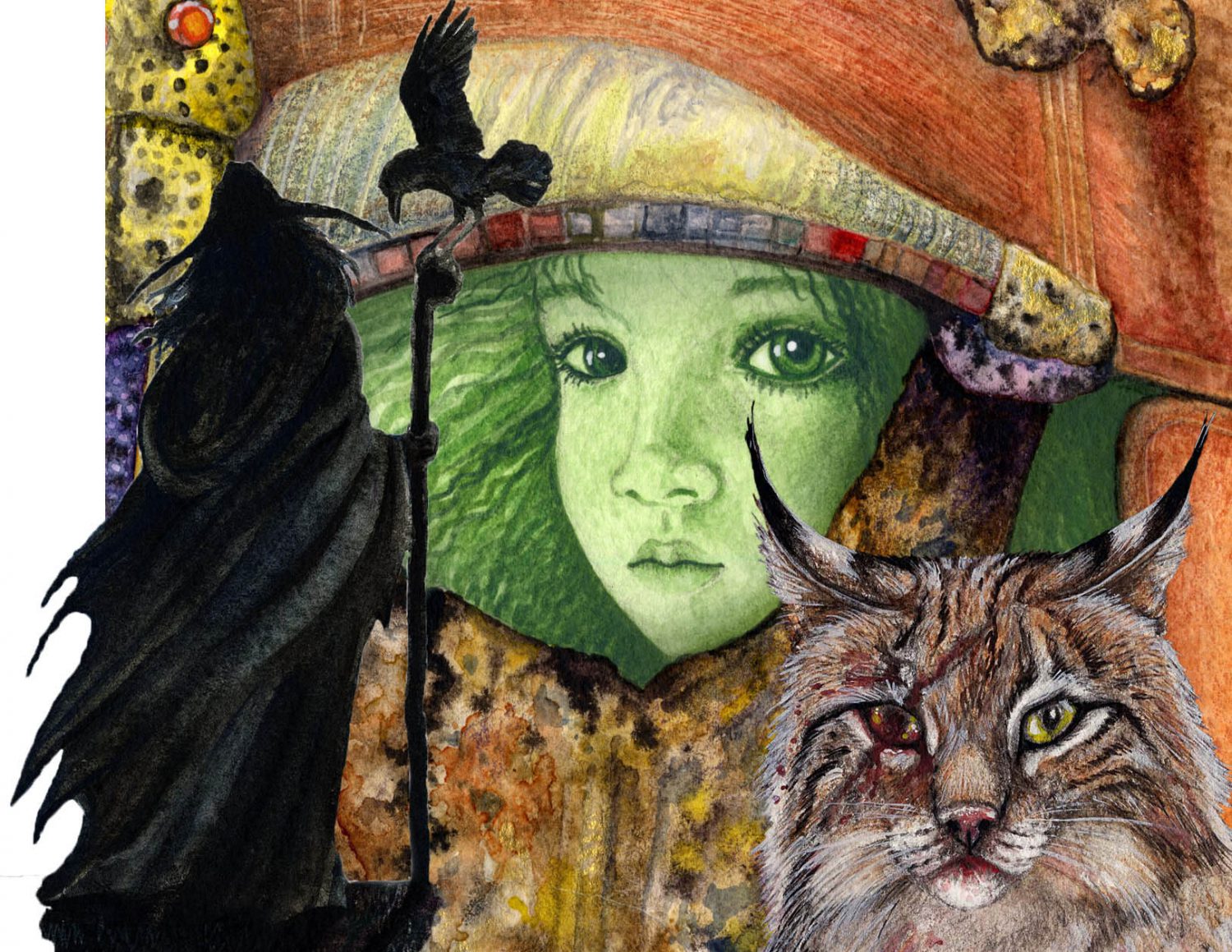
When I approach a new manuscript I am always hoping for stories that are unique and particular to the area to allow me to produce a cover image that reflects something special about it that is intriguing to the reader.

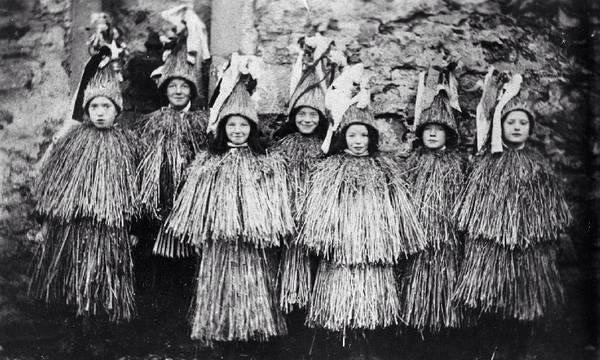
With the Shetlands folktales book by Lawrence Moar Tulloch, I had a good choice of tales that were peculiar to the islands as often happens with the more isolated parts of the U.K. This is a wonderful but also a tricky thing as being spoilt for choice can sometimes lead me to inertia while I try to decide which direction to take. So I started to google Shetland images to get more of a flavour of the islands and in the hopes that something would lead me in a particular direction and found this.
image

These children, I discovered, were dressed as ‘Skeklers’ Skekling is an old Shetland folk tradition. in a variant of the ‘guising’ tradition,  Skeklers would go round the houses in their distinctive straw costumes at Hallamas, New Year, and turn up at weddings in small groups performing fiddle music in return for food and drink. It is believed that this fascinating custom had all but died out by 1900 and the children I had seen in the old photograph were actually a recreation of the tradition for the Up Helly ‘A festival.

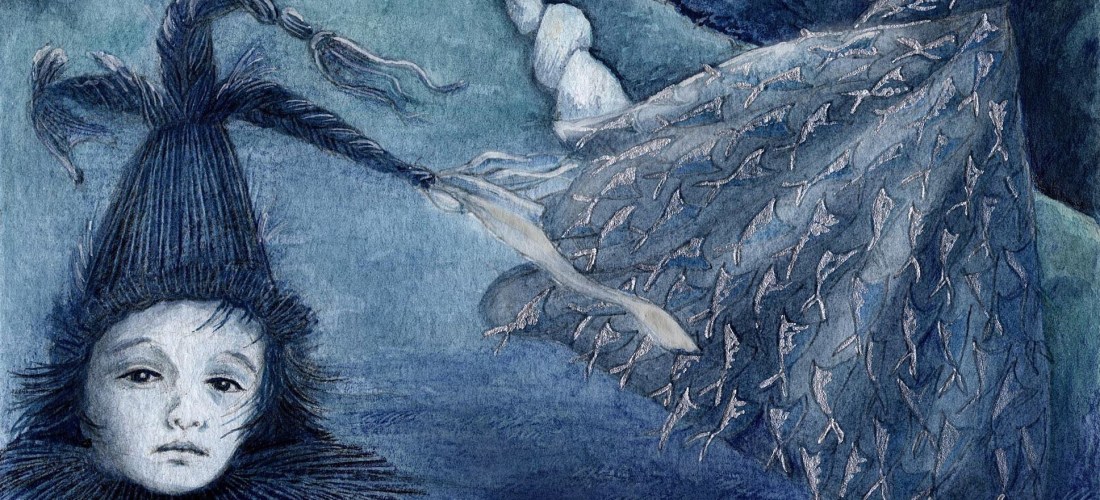
I remembered making notes that said ‘straw costume?? And went back to find the story that it featured in, ‘The Hallamas Mareel’ now I had an arresting image and a good story to attach it to and having also found some images of the landscape In the story I was all set.

There were a few challenges along the way, mostly to do with how the light would work as I needed the figures to have detail when they should have been in sillouette with the moonlight behind them. But that is why I illustrate… So I can play around with these realities… The child’s wistful face came from a book of vintage photos I have called ‘anonymous’ which I often turn to for inspiration.

this is my only cover (as far as I know) to appear on TV, when the book was given as a gift in the detective series ‘Shetland’ l received a flurry of messages after it’s screening for which I was grateful as I had no idea since I don’t have a TV!

Da Hallamas Mareel

reproduced with the kind permission of Lawrence Moar Tulloch

(I realise  some of the language here may be difficult for some, but you can still understand the gist of the story and it is too poetic to meddle with even if I wanted to)

At the Burgi Geo in northwest Yell there is the remains of an Iron Age Fort. It is on a headland joined to the rest of the island by a narrow neck of land. There are rows of standing stones that lead, on one side, in to the fort but on the other side the standing stones lead the unwary over the high cliff and to their doom.

Long after the original inhabitants left the fort was taken over by a ruthless and cruel band of Vikings who preyed on the honest and hard working udallers. West-A-Firth, in those days, was a wild and lawless place.

It was late autumn and the children of West A Firth were preparing for the Hallamas. Wearing the traditional straw hats they had been to every house in the area, save one, collecting money for the Hallamas, the party that took place every year.

The house that they never went to was a miserable hovel deep in the hills, the Spaeman, the hermit, Isaac Omand lived there and he welcomed no one and no one knew how he made a living and if he was ever heard speaking it was always in riddles that no one could understand.

All the money collected was given to Mary. She was a spinster who lived alone but she loved children and she was always to the fore at Hallamas time. Along with Martha Rassusson and Jenny Ninian she went to the shop at Glippapund to buy the food for the party.

For the rest of the week they baked fatty bannocks, currney buns, oven sliddericks and dumplings. They made tattie soup they kirned for fresh butter, kirn milk and blaand. A lamb had been butchered and meat and mealy puddings were cooked.

When Mary returned home after visiting a neighbour she was distraught to find that the robbers from the Burgi Geo had raided the house and taken everything. On being told the Oldest Udaller called a meeting and the folk came from Setter, the Neap, Graven and Vigon to discuss what they could do.

There was no question of confronting the Vikings; they were far too powerful and to try and fight them meant the certain loss of life. Sadly there were no suggestions and most were resigned to their fate.

‘Der only da wan thing we kan dü”, declared the oldest Udaller, “we maun geng an ax the Spaeman.”

“Der nae öse o dat,” said Sigurd Ollason, “he’ll never spik tae wis an even if he dus we’ll nivver keen whit he means.”

In the absence of any other ideas Sigurd and Tirval Ertirson was sent to consult the Spaeman. When they arrived at his house they got the impression that Isaac Omand was expecting them.

He was outside, a tiny man dressed in rags, he had a long grey bread and he had not been washed for a very long time. He never gave them a chance to speak but said in a shrill wavering voice.

“Da Burgi Geo men ir fat an greedy
While wis puir fok ir tin an needy
Bit ta mak things rite an weel
Ye maun öse da Hallamas mareel.”

So saying he went inside and shut the door leaving Sigurd and Tirval speechless. Feeling that their journey had been wasted they made their way back and to the house of the Oldest Udaller. They told him the Spaeman’s rhyme and waited for his response, which took some time in coming.

“ Da only plis it we kan get mareel fae is da sea so sum o you il haeta geng ta da kraigs.”

They saw it as being futile but they did as they were told. Took their homemade rods and began fishing from the rocks. When the light began to fade they were astonished at the mareel in the water. They had never seen anything like it, the sea, the fish and the fishing line flashed with ribbons of fire.

On the way home Sigurd suddenly had an idea of how they could use the mareel. He was confident that the robbers would come to steal the fish so he got Tirval and others to skin the piltocks and sillocks. From the womenfolk he got old blankets and pieces of linen and they began to sew the fish skins on to the cloth.

Six men donned the mareel covered cloth and they set off westwards towards the Burgi Geo but hid below the banks of the burn to keep watch for the robbers. The mareel flashed like green fire in the moonlight.

They did not have to wait long and all the men kept low until Sigurd gave the shout and they all leaped up shouting, jumping and waving their arms. The effect on the robbers was amazing, they were terrified and turned tail and ran back towards the Burgi Geo as fast as they could go.

The West-A-Firth men followed screaming and shouting. The robbers, in their panic, followed the wrong set of standing stones and every last one of them disappeared over the cliff to their death.

In the days that followed the West-A-Firth men ventured in to the fort and found it empty of people but they were able to recover many of the things that the robbers had stolen from them over the years. And so the community enjoyed the best ever Hallamas and they were able to live in peace and with plenty ever after.

And finally

whilst going over my research for this blog I came across these beautiful images by  photographer Gemma Ovens

(www.gemmadagger.co.uk) and she kindly agreed that I could reproduce them here, so you could see them too…the story of how they came about is an interesting one and you might like to check out this video below on Vimeo about them ‘clutching at straws’

Shetland Folk Tales can be purchased from the History Press, http://www.thehistorypress.co.uk/local-history/storytelling or direct from me (signed copy) at kcaddick@aol.com


Cover Stories – Cat and Man

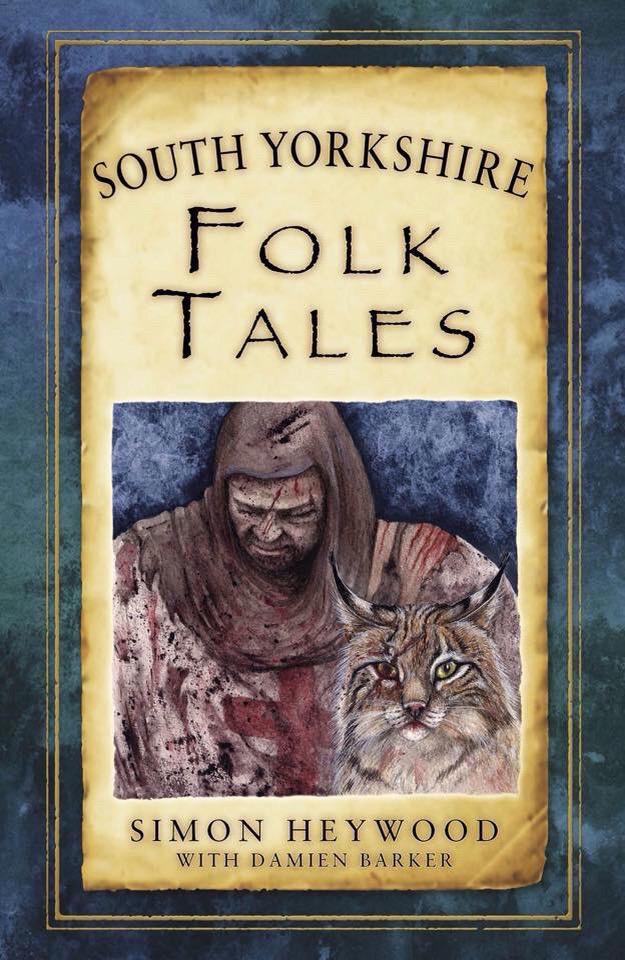
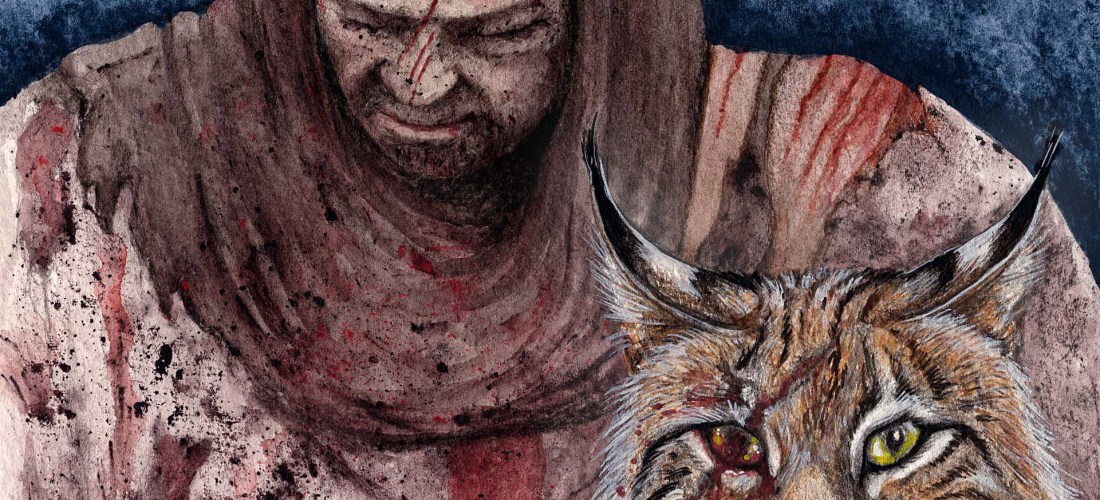
When I started to read through South Yorkshire Folktales by Simon Heywood and Damien Barker I had no idea that I would be stopped utterly in my tracks by a tale of a battle to the death between man and feline ending in the porch of Barnborough church.But the powerful and visceral retelling of this story caught my imagination like nothing else in the manuscript.

I started with an image in my head of a Scottish wildcat, thinking of the word ‘woodcat’ but he soon morphed into the Lynx you see in the final version. Simon and I messaged to and fro concerning just how graphic the image should be in terms of blood and injury and agreed that it needed to reflect the nature of the story so more gore was gradually added… Much to my satisfaction as I was having tremendous fun with it.

Here is the story, reproduced with the kind permission of Simon Heywood.

‘In the shadowy undergrowth that hemmed the road, he could hear the beasts of the night, but it would be a strange thing at that hour if he could not have heard them. There is little silence in nature.
So there was no warning before the burning pain struck him, and a heavy weight in the darkness sent him reeling. He grappled for his sword, spurring his horse as it reared, and twisted in the saddle, to face his unknown attacker.
Even today, rumours of great cats haunt the field and roads of the district. Already, in Percy Cresacre’s days, they were rare. The Cresacre gamekeepers and foresters had seen to that.
But they were no rumour. Percy was under attack, and, twisting round to face his assailant, he found himself staring, terrified, into the hissing, spitting snarl of a great wild wood-cat, the first he had ever seen.

the cat seemed to be driven by something more than hunger or fear. It was almost as if it knew him. The cat landed on its feet beside him, wheeled, and lunged again. The man seized the sword where it lay in the corner of his eye, and kicked and stabbed desperately, Stung, the shadowy beast withdrew a pace. Percy scrambled to his feet. The cat gaped and snarled and spat in the shadows. But for the moment the man had it at bay.
Far behind them, the terrified horse was disappearing, riderless, up the moonlit road, making for Barnburgh
Percy was stranded, alone and on foot, facing a hand-to-hand fight with a seemingly implacable enemy. For a moment, the two faced off against each other, and Percy caught his breath. He was annoyed and unsettled, but still not seriously afraid. He knew now that he would have to back slowly up the hill, parrying and defending until the thing fled. But he would make it home and have nothing worse to worry about than finding a way to laugh off his misadventure when the household got to hear of it, as they surely would. Holding his sword on guard, and keeping his eye on the hissing beast crouched before him, he began to back slowly up the road. The thing came after him, prowling on its belly. Percy was just beginning to get into something like a stride when it suddenly readied itself, and sprang again. With horrific suddenness the wood-cat was at his throat again, in his face. For a moment, cat and man were face to face in the dark. Its eyes were wide with a strange, cold, ageless light. His own burning blood flowed under its claws and fangs. He seized the blade of the sword with both hands, and parried the lunge at close quarters. The blade of his sword gashed the cat’s face deep. It hissed, and writhed, and fell. Percy almost cheered.
It will not be too proud to run now, he told himself. Beasts are wiser than men.

But the cat did not run. It recoiled, turned smoothly round, gathered its strength and balance, and came at him again, and again, as remorseless as lightning in a storm. He fended its huge weight off with kicks and blows, and it slid back, rallied, and sprang again. He braced himself. They grappled again. The man’s blood had flowed at the first blow, and now the tatters of his rich coat were soaked.
Percy Cresacre’s head began to swim. He felt something worse than pain in his own bloody wounds; he could feel the cat’s fury, worming deep into his flesh like a loathsome disease.
And with that thought, Percy Cresacre began to feel afraid. For he was bleeding. Orderly and peaceful though his life had mostly been, Percy was still a knight by rank, and a maker of war, and he knew what it was to lose blood in a long hand-to-hand fight. Even if he made it to the village, if he came too slow, or too late, and too weak, then he would be coming home only to sicken and die, slowly, as Robin Hood himself had died, in the songs and stories of Barnsdale which Percy had known well all his life. And that meant one thing: the cat had the power to kill him. The thing was mad, and that meant that the fight in the moonlight was a fight to the death.
And so the man swallowed his disgust and faced the cat again; and the cat faced the man, and each in the moonlight looked long and hard into the face of death. And all that night, cat and man fought their lonely fight, across Harlington Common and up the hill to Barnburgh, across road and river. The hours passed, and the man began to feel as if there had never been a time that he had not been staring into the eyes, the snarling teeth. It seemed like a dream. At times, Percy felt that he was watching another man fighting the cat: in the middle of his own terror, he felt strangely calm, even as the prospect of a safe return home became ever more remote. They fought on, and every so often Percy’s thoughts would flicker to the warm rooms and friendly lights of his distant home, and the memory struck him as the memory of a strange place. A foreign place. He no longer seemed to belong there. He belonged here: killing a wild cat under the moon, in the shadows of the trees.
As the moon sank, the cat’s blood lay mingled with the man’s all along the road; their movements grew slower and their breathing heavier.
Day began to dawn unseen around them as they fought: slowly, peacefully, little by little, the darkness lifted and the twilight gathered in the east.
At last, on the outskirts of Barnburgh, the exhausted knight faced his mortal enemy one last time: an angry, hissing animal, wounded and dishevelled, scarcely bigger in the daylight than a farm cat. And then, for the first time, Percy spoke aloud to the dauntless little animal. His voice sounded hoarse and strange in his own ears.
“Have I shed all this blood,” he asked aloud, “for thee?”
The moonlit gleam was gone from the little cat’s green eyes, but still it hissed and snarled. It drew itself up, its ears flat. It was ready to pounce again.
And then, at last, in that moment, Percy saw the only way the fight could end. Strangely, the last of his fear left him, and his heart grew light. He wanted to laugh, but he had no breath left. So, in a hoarse whisper, he spoke again to the cat, for the last time.
“Well, look: here we are in Barnburgh: I have made it home at last. When I set out last night,”
he said – and he scarcely knew why he spoke – “I thought that I ruled the forest. But I was wrong. I was a rich man then: a man of property. Today I leave the world empty-handed, forever. But I die as my fathers died, sword in hand. And now when I meet them, I know they will not be ashamed. You, my enemy, fought naked and unarmed, with the heart of a hunter, and you fought in your own place, for your own territory; and you have brought down a rich man in his pride. So of the two of us, you are the greater. Come, then, little cat. Not far to go now. Let us go home.”
Percy Cresacre was found that morning by one of the priest’s servants, alerted by the search party from the Hall, where the riderless horse had come in the night. The knight had made it as far as the church porch. It seemed that he had crawled there in purpose, as if to make sure that he would be found.
Wonder struck the grieving servants when they found him, and silence fell on them. For dead at their dead master’s feet lay a wild wood-cat, bigger by far than any they had ever seen, or heard of. No such wild beast had ever ventured into Barnburgh by daylight before. Even in the first shock of grief, even in death, they saw that the beast, was magnificently, cruelly beautiful; beautiful as wild animals are. But its ribs were smashed. In his death-agony, Percy Cresacre had crushed the wood-cat to death with his boot, against the wall of the porch.
They laid sir Percy Cresacre in the tomb in the Cresacre Chapel, in the corner of St Peter’s church. In the dark oak of the tomb, they carved the figures of cat and man, lying as they were found. The carving can still be seen today, just as the story it tells can still be heard.

about the Cat and Man story

The story of the Cat and Man (the cat is always mentioned first, and no-one ever
seems to refer to “the Cat and the Man”) is widely told today and references can be found in Bingley’s Animal Biography of 1802; and Hatfield’s “Village Sketches” in the  Doncaster Gazzette of 1849.
How long the story was told before that is a matter of surmise. It is not implausible that a knight called Cresacre might have been attacked by a wild wood-cat on a ride from Doncaster to Barnburgh. The lynx was not exterminated in Britain untilMthe seventeenth century. But the real Percy Cresacre was not a crusader, and the tomb in St Peter’s is probably that of his ancestor Thomas. The wooden effigy shows a cat crouched at the feet of the knight, but this is more likely to be a representation of a lion, a common symbol in tombs of the time.
It is possible therefore that the story is more symbolic than a simple narrative and Ted Armstrong (1980) argued that the legend was originally “a means of remembering the stones and centres of the earthly powers which the Templars knew of and tried to subdue … The conflict (Kat) over the power of the stone
(Maen) became the legend of the Cat and Man.”
Modern references include Bob Chiswick’s song The Ballad of the Cat and Man, recorded in 1987 by his band Off the Cuff (1987) and Ted Hughes – a Mexborough lad – also referenced the story in his well-known poem “Esther’s Tomcat.” In 1993ll

image

South Yorkshire Folk Tales by Simon Heywood and Damien Barker can be purchased from the History Press, http://www.thehistorypress.co.uk/local-history/storytelling or direct from me (signed copy) at caddick@aol.com

Calendar time is here once more.

This will be the tenth year I have produced a calendar of my work. It always seems so early to be organising this in August, but proofs have to be approved, printing has to be quoted for and then they have to be packed and sent around the world in time for Christmas.

Calendars  are £15.50 + £3 Postage

If you are interested in purchasing one contact me at kcaddick@aol.com for details before the end of September as the print run is strictly limited to advance orders.

Calendar images for 2017


Cover Stories – Where Dragons Soar

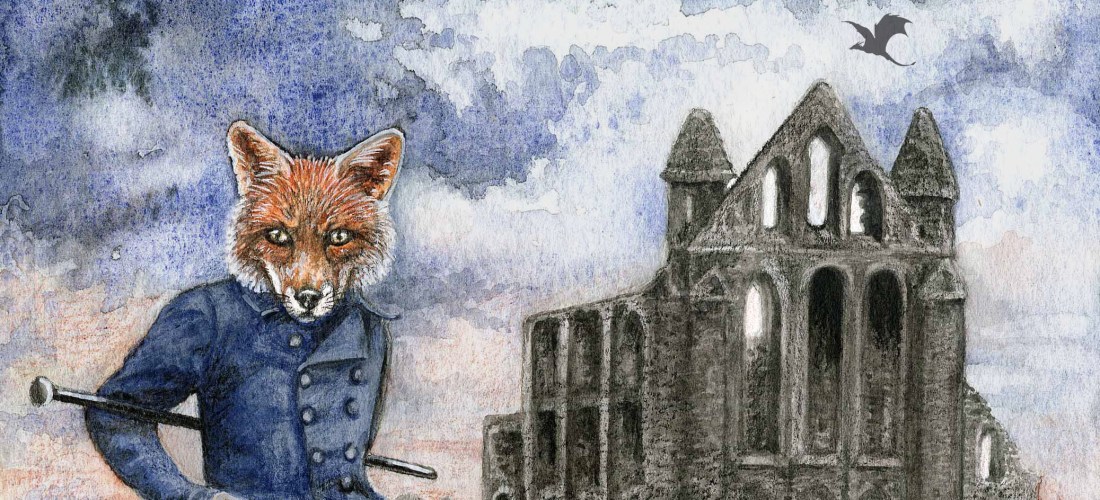
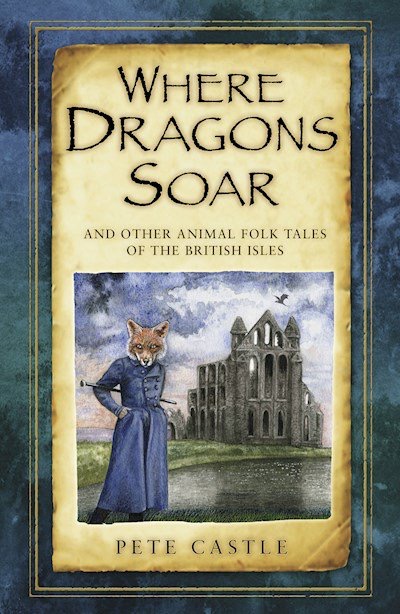
I chose the ballad of Reynardine for my cover image almost immediately I read the manuscript for ‘Where dragons soar’ but felt I had to consult Pete Castle before I began the piece as it was a song rather than one of the many brilliant stories in the book. Pete said ‘yes! That would be great! Can you put him in Whitby too? So an idea was born…

I first heard this ballad on Buffy Sainte Marie’s ‘Fire and Fleet and Candlelight’ album when I was very young and was reminded of it years later when I saw the film adaptation of Angela Carters ‘Company of Wolves’ the combination of dangerous males and shapeshifting is always an intriguing one for me.

Because he was going to be placed in a Whitby setting there was also the vampire connection to be played with a little so I found a vintage photo of a rakish gent I was hoping would not look altogether out of place in Whitby at certain times of year even now and photoshopped a fox head onto his shoulders. I tried a few different ones but eventually settled on one with a particularly penetrating stare looking directly at the viewer. With the addition of Whitby abbey in the background and a sky from one of my own source photos I had my composition sorted and could begin to paint.

I form a relationship with all of my cover characters during their creation and this one was not an easy one for me… I had to put him out of sight between sessions as he rather unsettled me, (he still does a bit) and I was glad to send him off to the publisher finally! The observant among you will notice I added a tiny dragon to reference the book title, you have to look to spot him though…

Here is a bit more info about the song itself for those who may be interested, the lyrics are Sandy Dennys version:

Reynardine

One evening as I rambled
Among the leaves so green,
I overheard a young woman
Converse with reynardine.

Her hair was black, her eyes were blue,
Her lips as red as wine,
And he smiled to gaze upon her,
Did that sly, bold reynardine.

She said, `kind sir, be civil,
My company forsake,
For in my own opinion
I fear you are some rake.”
`oh no,” he said, `no rake am I,
Brought up in venus’ train,
But I’m seeking for concealment
All along the lonesome plain.”

`your beauty so enticed me,
I could not pass it by,
So it’s with my gun I’ll guard you
All on the mountains high.”

` and if by chance you should look for me,
Perhaps you’ll not me find,
For I’ll be in my castle,
Inquire for reynardine.”

Sun and dark she followed him,
His teeth did brightly shine,
And he led her up a-the mountains,
Did that sly, bold reynardine.

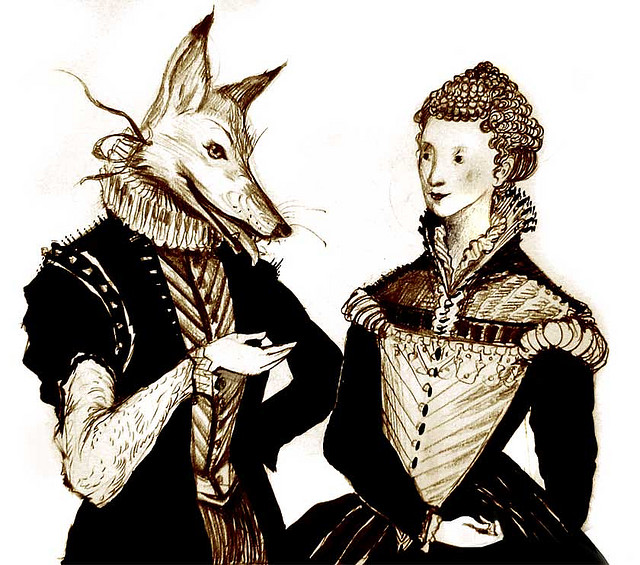
the song was originally published as a broadsheet in 1804 with the title ‘The Mountains high’ and although the name “Reynardine” is found in the 19th century version, the association with foxes, as well as Reynardine’s supernatural characteristics, first arise in connection with a fragment of the ballad (a single stanza) that was collected in 1904 by Herbet Hughes.

tumblr_l8p3ntsERU1qc0cv9o1_1280

The source’s recollection of the ballad was that Reynardine was an Irish “faëry” who could turn into a fox. This ability may have been suggested by the fact that Reynard is french for Fox…
Both Hughes and a friend named Joseph Campbell wrote short poems incorporating this stanza and the fox interpretation, aspects of which A L Lloyd in turn adapted for his versions of “Reynardine” Lloyd’s versions incorporate several striking turns of phrase, including “sly, bold Reynardine” and “his teeth did brightly shine”, that are not found in the original ballads.
Lloyd generally represented his versions of “Reynardine” as “authentic” and few modern singers know that the ‘werefox’ interpretation of the ballad is not traditional. Lloyd’s reworkings are certainly more interesting to the modern listener than the simple and moralistic original ballads, and have gained far greater interest from singers and songwriters; his versions of “Reynardine” have served as inspiration for many additional modern versions
A version of unknown origin from the late 19th century is called “A Vampyre Legend.” In this variation, Reynardine is searching for concealment from “the Pious men”, and the young woman’s fainting and paling colour are due to blood loss.

image

well, hello there!

So… this is where i will be writing about my projects and work in progress. The most ambitious of which is my plan to produce an Illustrated book based on a traditional tale I have come across through my wanderings and my folk tale illustration work. This story has closely matching versions in both the Moroccan Sahara and Scotland, two very different but wild and beautiful places that are dear to me. I also want to explore through this work how stories unite us, how we tell each other so many of the same tales all over the world because we are all one people, one blood and one tribe in the end.

much of this blog will be eventually be devoted to this project, hence the title…

This will not just be me sitting in my drawing den making paper dirty though,  plans are afoot for others to be involved with this, in both countries, but much more on that later.

I will be sharing some of my favourite cover stories here too, each one was chosen because it had a particular resonance for me.

I will also occasionally  be posting my famous ‘work in progress’ posts, beloved of my fans on Facebook on this blog, So more people can enjoy the agony, did I say agony? no! the wonderful creative process from sketch to final piece. ahem.

So watch this space, I hope to have more news to share with you very soon.